

Dash cams, wired properly
Hardwired to the fuse box. No cable swinging down your windscreen. It watches the car while you sleep — and it will not flatten the battery doing it.
The install matters more than the camera
Wired badly, a good camera is a dangling cable and a flat battery. Wired properly, a modest one is evidence.
Why fit one at all
Most people call us the week after something happened. Fit one before, and you own the only account of events that is not somebody’s opinion.
It settles fault fast. A disputed intersection is your word against theirs. That argument takes weeks and runs through your insurer. Footage ends it in one phone call.
It kills staged claims. Brake-checking and invented whiplash only work when there is no record. A camera removes the incentive before anyone tries.
It works while you are nowhere near the car. A trolley strike at the shops. Someone reversing into you at 2am and driving off. Both recorded, both time-stamped. That is the difference between an excess you swallow and a claim you make.
Your insurer cares, even if they will not say so. We are not going to promise you a discount. But footage proving you were not at fault protects your no-claim history, and that is where the real money is.
None of it counts for anything if the camera is wired badly, dies when you park, or has been writing to a dead card for six months. Which is what the rest of this page is about.
Why hardwire instead of the lighter socket
Every dash cam ships with a cigarette lighter plug. Almost none should be run off one. You get a cable swinging across the windscreen, a socket you have lost for good, and a camera that dies the second you turn the key.
Hardwiring takes power from the fuse box instead — correct fuse tap, inline fuse, cable up the A-pillar, behind the headlining, down to the panel. Out of sight the whole way. Done properly, the only part of the installation you can see is the camera.
That trim work is where installs go wrong. The pillar on a modern car sits over a curtain airbag, and those clips are built to release, not to be levered. It is the same careful dismantling we do for interior detailing, which is why the two jobs sit together so naturally.
Hardwiring is also the only way to get parking mode at all, because the camera needs a permanent live feed to watch the car while the ignition is off.

Parking mode, and the battery question
Parking mode is the reason most people hardwire. It lets the camera monitor the car while it is parked and unattended, which is where a surprising share of damage actually happens. Shopping centre car parks, street parking, workplace car parks and apartment garages account for a great many of the incidents nobody witnesses.
The obvious worry is the battery, and it is a fair one. A camera drawing power for days will flatten a car that only does short trips.
Low-voltage cutoff
The answer is a hardwire kit with a low-voltage cutoff. It monitors the battery and powers the camera down once voltage drops to a set threshold, leaving enough charge to start the engine. In Australian conditions that threshold usually wants to sit around 12.2 to 12.3 volts.
We set it around how you actually use the car. Someone doing twenty minutes a day needs a more conservative cutoff than someone commuting an hour each way, because the shorter trip never fully replaces what parking mode drew overnight.
Motion, impact or time lapse
Most cameras offer several parking modes. Impact detection wakes the camera when it is knocked. Motion detection records when something moves nearby, which fills a card quickly on a busy street. Time lapse records continuously at a low frame rate and is usually the sensible default.
Front only, or front and rear
A front camera covers the incidents you are most likely to be blamed for. A rear camera covers the ones you are most likely to be hit by, and rear-end impacts are the single most common claim there is.
Rear installations are meaningfully more work. The cable has to run the length of the car through the headlining, down the rear pillar and, on a hatch or wagon, across the tailgate loom where it flexes every time the boot opens. Done badly it rattles, chafes and eventually fails. Done properly you never know it is there.
If you park on the street rather than in a garage, the rear camera earns its keep in parking mode as much as it does on the road.
Choosing a camera
Resolution is not the spec that matters
Past a certain point, resolution stops being the thing that decides whether footage is useful. What decides it is whether a number plate is legible, and that depends far more on frame rate, lens quality and how the sensor handles extreme contrast than on the headline megapixel figure.
Sydney conditions are unkind to cheap sensors. Low winter sun straight down an east-west street, or the jump from bright daylight into a dark car park, are exactly the moments a poor camera blows out and loses the plate you needed.
Capacitor, not battery
This is the most common failure we see, and it is worth knowing before you buy because no installation can fix it afterwards.
Cheaper cameras use a small lithium battery to hold the clock and shut down cleanly. A car parked in a Sydney summer reaches temperatures that degrade those batteries quickly, and a swollen lithium battery is both a dead camera and a genuine hazard. A capacitor-based camera handles heat far better and is the sensible choice in this climate, particularly for a car that lives outdoors or runs parking mode.
Where it sits
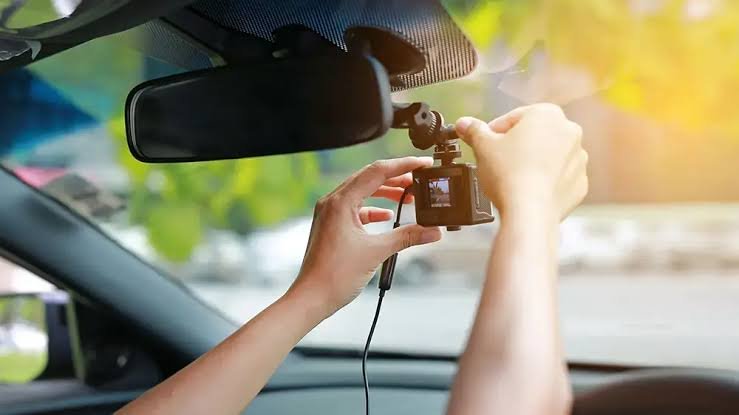
Behind the mirror, high on the glass, inside the area the wipers actually clear. Mounted low on the dash a camera films a lot of bonnet and a lot of windscreen reflection, and in NSW it also needs to sit where it does not obstruct your view.
Memory cards, the part everyone forgets
A dash cam writes non-stop and overwrites its own oldest footage. That is a brutal job for a memory card. A standard card will fail at it, quietly, and you will find out on the one day it mattered.
Use a high-endurance card rated for continuous video, and format it in the camera every month or two. Most cameras have the option buried in the settings menu.
Check it is actually recording now and then. A dead card usually leaves the camera looking perfectly healthy from the driver’s seat — screen on, light lit, recording nothing.
The installation, step by step
A front-only hardwired install is usually a couple of hours. Front and rear takes longer, because the cable runs the length of the car. Both are same day, and both can be done at your address or at the studio.
Camera check and placement
We confirm the camera and its hardwire kit are compatible, then agree the mounting position with you before anything is stuck to the glass. Adhesive mounts do not enjoy being moved.
Fuse circuit identification
We find a suitable circuit on the fuse panel, one that is switched or permanent depending on whether you want parking mode, and confirm it with a meter rather than a wiring diagram printed off the internet.
Trim removal
A-pillar and headlining trim released rather than levered. On most modern cars that pillar sits over a curtain airbag, so the clips come out properly and go back properly.
Cable routing
Up the pillar, behind the headlining, down to the fuse panel, secured so nothing rattles or chafes. On a rear camera the cable runs the length of the car and across the tailgate loom, which is where most poor installs eventually fail.
Hardwiring
Correct fuse tap, inline fuse, earth to a proper chassis point. Not a scotch lock, and not spliced into whatever was nearest.
Parking mode and cutoff
Voltage cutoff set around how you actually use the car, parking mode configured, and the whole thing tested. Then we walk you through what it will and will not do, because a camera you do not understand is a camera you will not check.
Newer, prestige and electric cars
European, prestige and recent vehicles need more care rather than less. Fuse boxes are buried, trim is tighter and less forgiving, and the electrical architecture is less tolerant of a tap installed in the wrong circuit.
Electric vehicles are different again, because the 12 volt system behaves differently from a combustion car and parking mode has to be configured with that in mind. If your car is late model, prestige or electric, mention it when you book.
Most dash cam work we do happens alongside something else, and that is the efficient way to book it. It pairs particularly well with window tinting, since both involve working around the top of the windscreen and the A-pillars.
Your camera, or one you have not bought yet
Most of our installs are customer-supplied cameras. You buy the unit you want, we fit it properly, and you are not paying a margin on hardware you could have bought yourself.
If you have not bought one yet, tell us roughly what you want to spend and what the car is, and we will tell you what to look for before you order. The two things worth spending on are a capacitor rather than a lithium battery, which matters enormously in Australian heat, and decent low-light performance so a number plate is still legible at dusk.
Bring the hardwire kit as well if the camera came with one. If it did not, or if the one supplied has no low-voltage cutoff, say so when you book, because parking mode without a cutoff is how people flatten a battery.
Whatever brand you turn up with, the job is the same. The camera decides how good the footage is. The install decides whether there is any footage in two years.
Where the law says it can go
Dash cams are legal in NSW. The requirement is about placement: the camera must not obstruct the driver’s view of the road.
In practice that means high on the windscreen, behind or beside the rear-view mirror, inside the area the wipers clear. That position is also the best one for footage, so the legal answer and the practical answer agree, which is not always the case in this trade.
What to avoid: mounted low on the dash where it films bonnet and windscreen reflection, mounted where it blocks your sightline through a corner, or stuck to a pillar. Anything that impairs your view of the road is the problem, not the camera itself.
One more consideration that is not about placement. Dash cams record audio as well as video, and recording conversations has its own considerations, so most cameras let you disable the microphone if you would rather. We will show you where that setting is.
Road rules are set by NSW authorities and can change. Confirm current requirements with Transport for NSW if you are unsure.
Common questions
Will a hardwired dash cam drain my battery?
Not when it is wired properly. A low-voltage cutoff powers the camera down once the battery reaches a set threshold, typically around 12.2 to 12.3 volts in Australian conditions, leaving enough charge to start the engine. We set the threshold around how you actually use the car, because a short daily commute never fully replaces what parking mode drew overnight.
Are dash cams legal in NSW?
Yes. The requirement is that the camera does not obstruct your view of the road, which is why it belongs high on the windscreen behind the mirror rather than mounted on the dash. Recording audio of passengers has its own considerations, and most cameras let you disable the microphone if you would rather.
Do I need front and rear?
Front covers what you are most likely to be blamed for. Rear covers rear-end impacts, which are the most common claim, and it is worth more than people expect if you park on the street. If budget only stretches to one, start with the front.
Can I use the dash cam I already have?
Usually yes. Most cameras accept a hardwire kit, and if yours does not we will tell you before we start rather than after. Bring it along, or tell us the model when you book and we will check.
How much does it cost?
It depends on whether it is front only or front and rear, and on how difficult the car is to get into. A rear camera roughly doubles the cable run. Call 0470 429 866 with the make, model and year and we can price it on the spot.
Dash cam installation near you
Installation is mobile right across Sydney, at your home or workplace, or at the studio in Lakemba. We are busiest across the Canterbury-Bankstown LGA, so those suburbs have their own pages.
Bankstown · Campsie · Lakemba · Punchbowl · Greenacre · Revesby · Riverwood · Earlwood
All Canterbury-Bankstown suburbsWhere to next
Get it wired properly
Tell us the camera, the car and whether you want parking mode. We will price it on the spot. Open 7am–9pm, seven days.